
 admin
admin 1. Introduction
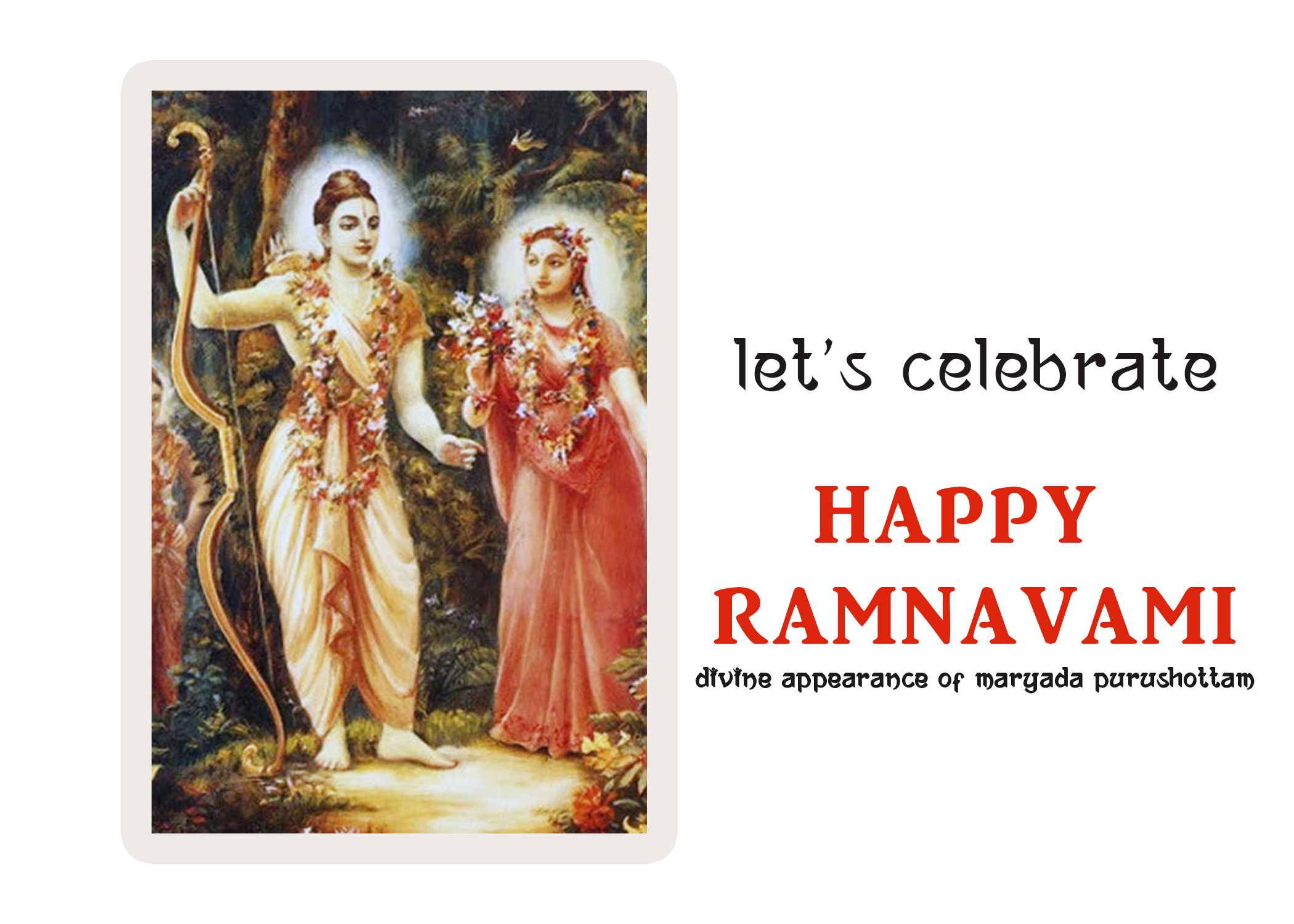
In the Treta Yuga, the Supreme Personality of Godhead, Sri Krishna, appeared in His divine incarnation as Lord Rama—the perfect sovereign, warrior, and embodiment of righteousness. His extraordinary life and teachings are narrated in the ancient Indian epic, the Ramayana, which continues to serve as a moral and spiritual compass for humanity.
2. Divine Birth and Royal Lineage
Lord Rama was born in the Solar Dynasty (Suryavamsa) as the eldest son of King Dasharatha and Queen Kaushalya of Ayodhya. He had three brothers—Bharata, born to Queen Kaikeyi, and the twins Lakshmana and Shatrughna, sons of Queen Sumitra.
Educated under the sage Vishvamitra, Rama excelled in Vedic knowledge, military arts, and moral principles. His early life was marked by heroic deeds, including the defeat of several demons that threatened peace and order.
3. Marriage to Sita
Rama’s strength and virtue were most notably demonstrated during the swayamvara (marriage contest) of Princess Sita, daughter of King Janaka of Mithila. Rama accomplished the impossible by lifting, stringing, and breaking the bow of Lord Shiva, a task none could complete. Sita, recognizing his divine nature and nobility, chose Rama as her husband. Their marriage was celebrated with grandeur and reverence.
4. Exile to the Forest
As Rama was preparing to ascend the throne, a tragic turn of events unfolded. At the instigation of her maidservant Manthara, Queen Kaikeyi demanded two boons previously promised by King Dasharatha:
1. The exile of Rama to the forest for fourteen years, and
2. The coronation of her son Bharata as king.
Despite the king’s anguish, Rama honorably accepted the command without protest, upholding his father’s integrity. He was accompanied into exile by Sita and Lakshmana. The people of Ayodhya were heartbroken, and King Dasharatha soon passed away, overwhelmed by grief.
Bharata, refusing to accept the throne, placed Rama’s sandals on it and ruled as His representative, awaiting His return.
5. Trials in Exile and the Abduction of Sita
During their forest exile, Rama, Sita, and Lakshmana encountered several demonic adversaries. One such encounter involved the demoness Shurpanakha, sister of the demon king Ravana, who was disfigured by Lakshmana after attempting to harm Sita.
Enraged, Ravana devised a plan to abduct Sita. Disguising a demon as a golden deer, he lured Rama and Lakshmana away. In their absence, Ravana abducted Sita and fled to Lanka. Rama and Lakshmana, upon discovering her disappearance, began an extensive search. They received crucial information from the dying eagle Jatayu, who had valiantly tried to rescue Sita.
6. Alliance with Hanuman and the Battle of Lanka
Traveling south, Rama formed an alliance with Sugriva, king of the monkeys, and his loyal general Hanuman, a devout follower of Rama. With their help, Rama’s army constructed a bridge across the ocean to Lanka.
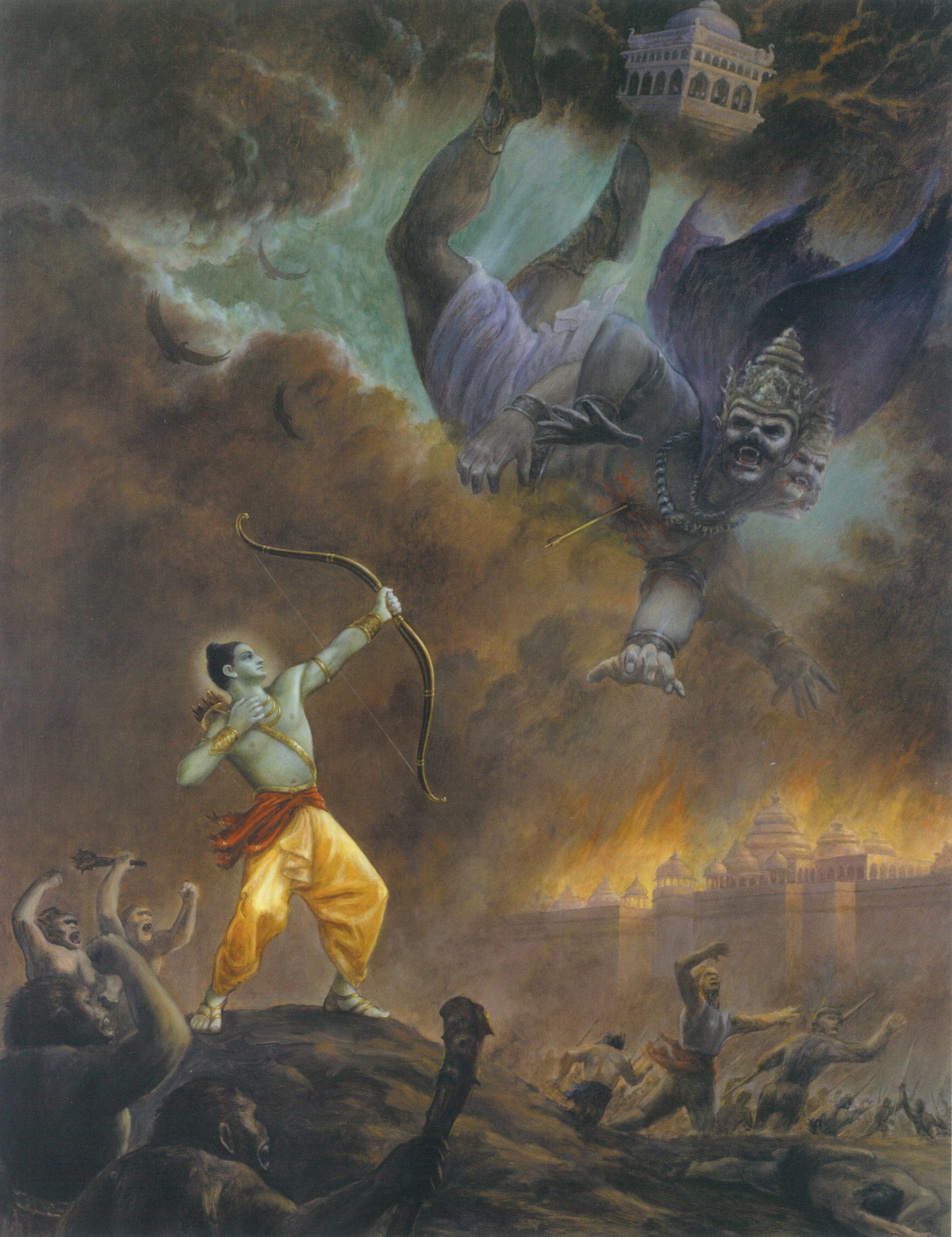
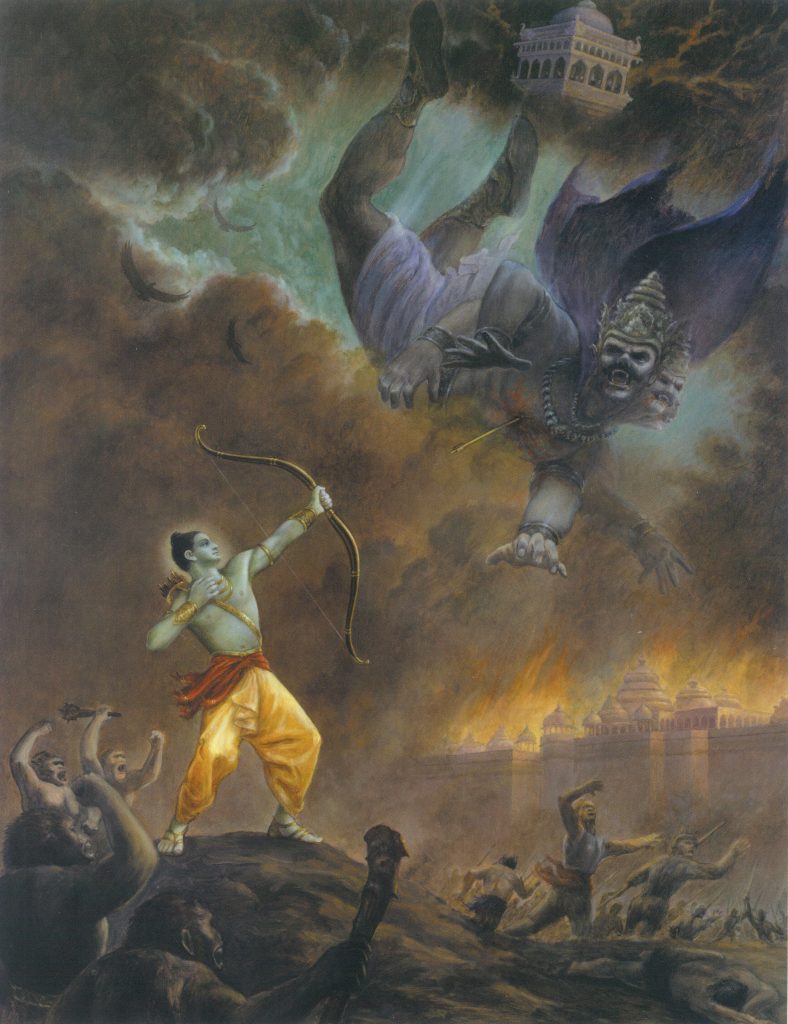
In the ensuing war, Rama led a fierce battle against Ravana and his demonic forces. Ultimately, Rama slew Ravana, liberated Sita, and restored righteousness.
7. Triumphant Return and Ideal Rule
Rama, along with Sita and Lakshmana, returned to Ayodhya in a celestial vimana (flower airplane). Their return marked the beginning of Rama Rajya—an era of peace, prosperity, and justice. The joyous occasion is celebrated annually as Diwali, the Festival of Lights.
According to the Srimad-Bhagavatam (Canto 9, Chapters 10–11), Lord Rama ruled the world with unparalleled righteousness. His governance was marked by:
• Justice, truth, and compassion
• Charitable acts and performance of sacred sacrifices
• Universal happiness and prosperity
• An absence of disease, suffering, old age, and premature death
8. Lord Rama’s Divine Character
Lord Rama is revered not only for His divine exploits but for His unwavering adherence to dharma (righteous duty). His qualities include:
• Monogamy: Vowed to have only one wife, Sita
• Filial Piety: Honored His father’s word above personal interest
• Virtue: Embodied humility, compassion, and justice
• Leadership: Served as the ideal ruler and protector of all beings
Through His life, Lord Rama demonstrated how to uphold righteousness even under the most challenging circumstances.
9. Celebrating Lord Rama’s Appearance Day
Devotees commemorate the divine appearance of Lord Rama with reverence and devotion. Traditional observances include:
• Fasting until sunset
• Reading the Ramayana or Srimad-Bhagavatam (Canto 9, Chapters 10–11)
• Chanting the Hare Krishna Maha-mantra:
Hare Krishna, Hare Krishna, Krishna Krishna, Hare Hare
Hare Rama, Hare Rama, Rama Rama, Hare Hare
Spiritual teachers explain that the name of the Lord is non-different from the Lord Himself. By chanting His name, we invoke His presence and purify the heart.
10. Devotional Practices to Honor Lord Rama
To deepen your connection with Lord Rama, consider the following:
• Reflect on His pastimes and teachings
• Chant His holy name regularly
• Cook a vegetarian meal in His honor, offer it with devotion, and share the sanctified food (prasadam) with family and friends
• Organize kirtan or storytelling sessions focused on His divine exploits
Conclusion
Lord Rama’s life is not just a historical or mythological tale—it is a living guide to dharma, leadership, family values, and devotion. Through remembrance, study, and celebration, we draw closer to His divine qualities and elevate our own lives.
Let me know if you’d like this tailored into a presentation, booklet, or formatted PDF version.